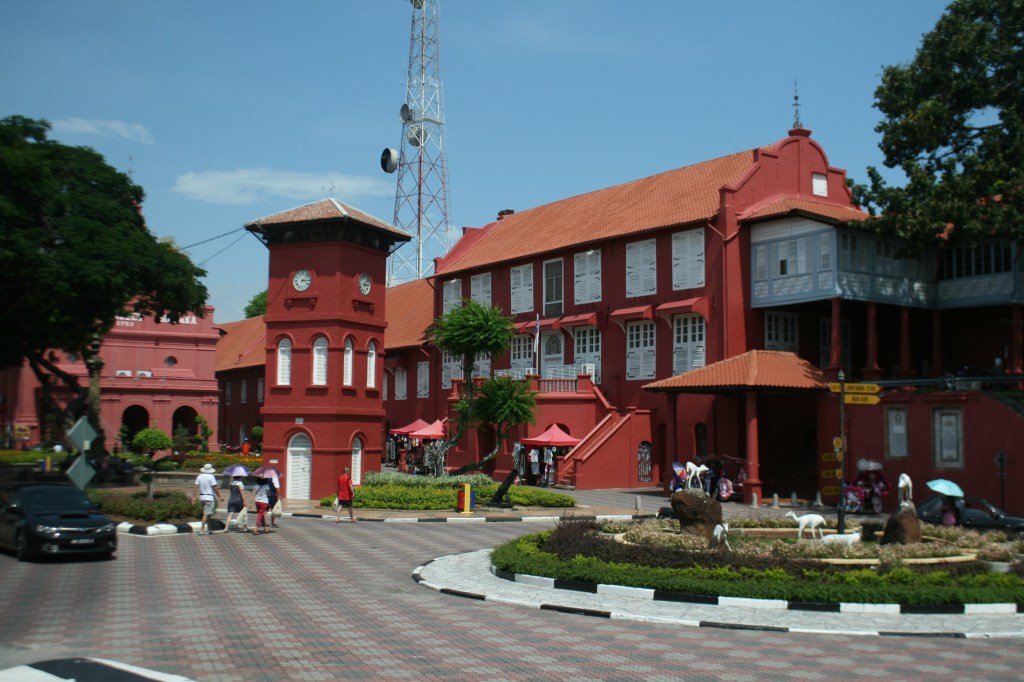
Little did I know right here, in my very own country, exists Malacca town that has been appointed UNESCO world heritage city for the last 7 years. Shame on me for not knowing! The last time I visited this city was probably when I was about 9 years old. I could not remember nor appreciate anything back then. So I had to make another visit.
Started off my interstate journey with a positive attitude which didn’t take too long (about 2 – 3 hours) depending how many pit stops you’d want to make. Malacca has a lot to offer, so we couldn’t afford to stop anywhere else for a night. The destination was straight forward.
HISTORY
Malacca is where it began. Here tells the story of how Malacca transformed into a busy port which influenced the humble formation of what we now call today….Malaysia. If there is one place you’d like to start your journey in Malaysia, I’d suggest you’d start in Malacca. In a brief note, there are plenty of Dutch and Portuguese influences that can be seen in the buildings and the food. As it was a busy port, there were a lot of integration between ethnics in the past, giving birth to Baba-Nyonyas. If there is one thing that makes Malacca unique, it is the Baba-Nyonya culture. It is too long to explain, I’d suggest to make a trip down here to find out more. There are plenty of museums and information around to poke your nose about. There are two major areas of exploration, separated by Malacca river (sungai Melaka). I will share my rough guide around Malacca in two days
DAY ONE
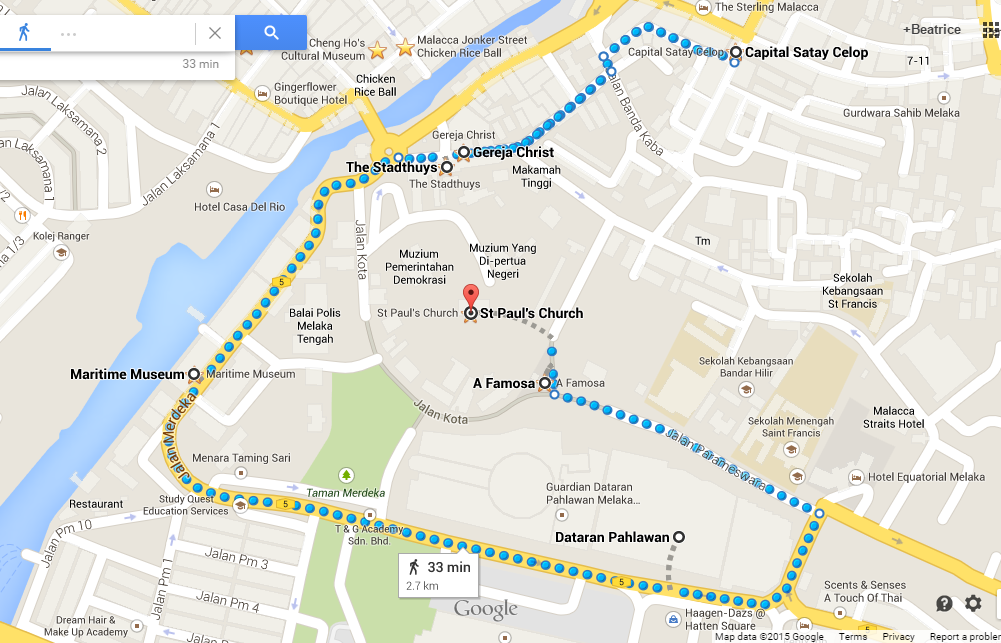
Our rough itinerary looked something like this. This journey we did on foot. You can opt to drive and park at the red square, also known as the Stadthuys building.
(Fact: The Stadthuys building is the tallest and oldest dutch building in South East Asia)
The red square is a good start. It is the center of the city and in walking distance to everything/ every place you need to know about Malacca.
If you don’t know it already, Malaysia is a country with diverse cultures. So the food is a must when visiting each state. As mentioned earlier, the Baba Nyonya culture is prominent in Malacca. So Baba Nyonya food is a must try. Famous dishes like “cendol”, “asam laksa” can be found along Jonker Walk.
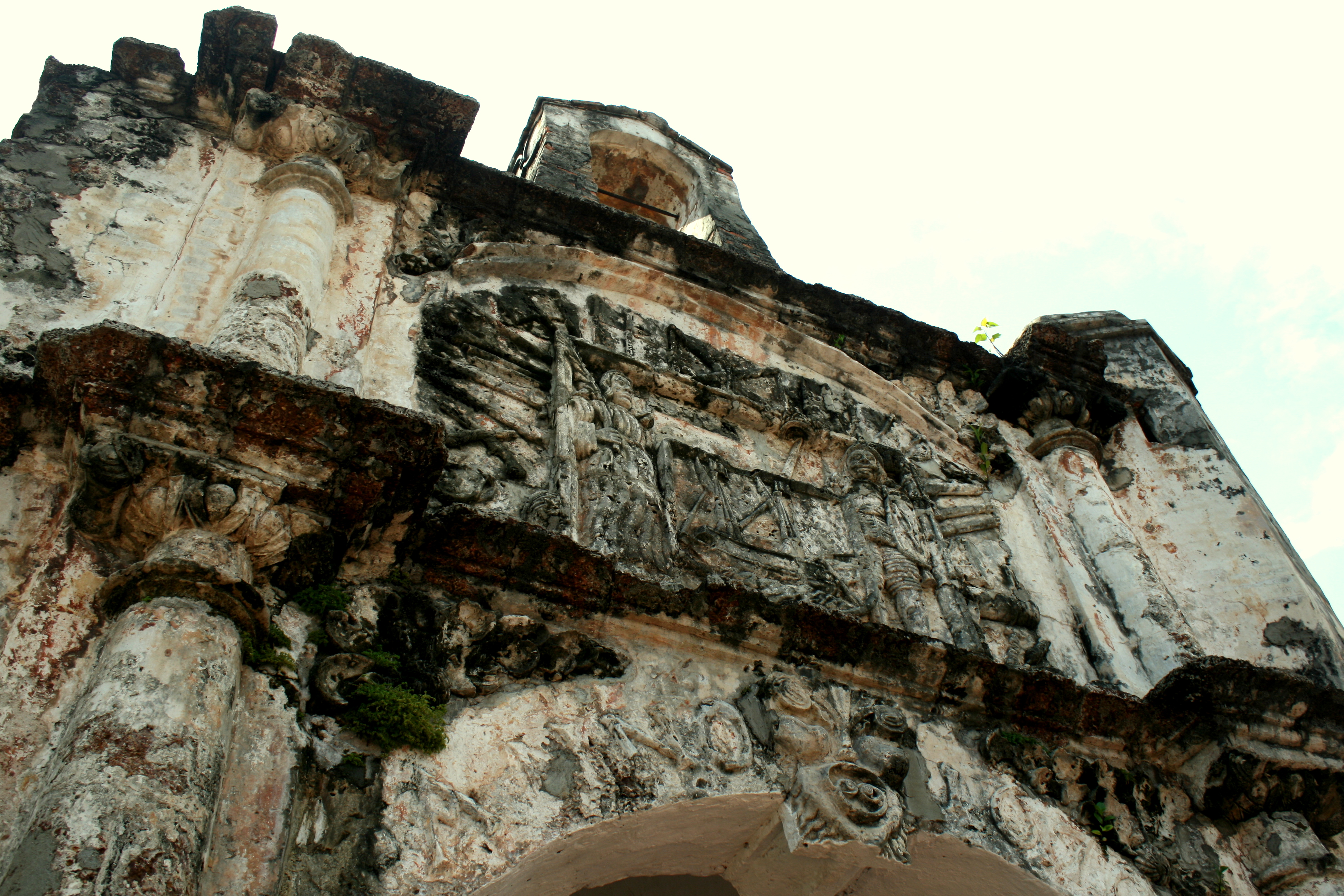
We stopped by the Christ Church, paid our respects and kept walking until we reached the maritime museum. The museums are small in Malacca some which you need to pay and some are free. Following along the road until we reached “Kota A’Famosa”, known as the A’Famosa fort. From there, you may continue to walk up the stairs towards St Paul’s church. You will be greeted with the church ruins, cool breeze and a view of the ocean. Just by standing on the hill, it was better understood that this fort was so important for the Dutch to keep watch of enemies.

DAY TWO
The next day covers the other side of the river. We explored Jonker street, the main attraction that hosts many buildings varying from food stalls, museums, souvenir shops and etc. One of my worthwhile visits include “Cheng Ho Cultural Museum“. There is an entrance fee but it is definitely worth it. Walking inside, you are immediately taken back through history (probably exaggerating, but that was what I actually felt!) This museum exhibits the life of admiral Cheng Ho, a voyager from China during the Ming dynasty that sailed to Malacca’s busy port and engaged with hefty trading. The relationship was so strong that he built a warehouse to store some of his goods while he continues to sail out. Inside showcases evidence of cultural exchange between the Chinese and local ethnics at that time. Besides that, it includes the brief history of Portuguese and Dutch settlement and how Malaysia was formed.
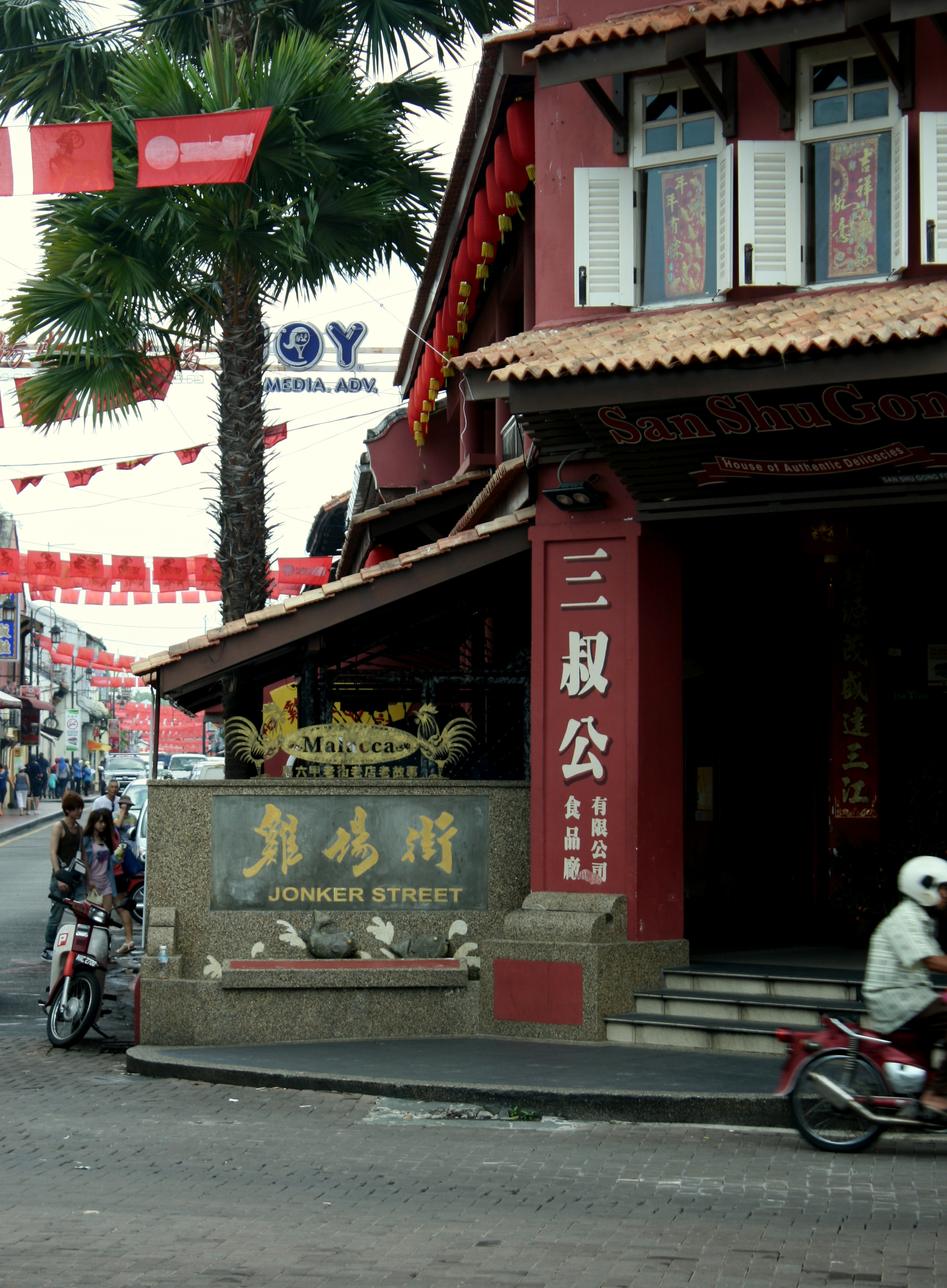
In my opinion, Jonker street is a very grey area from being a tourist trap and a local pit stop. I say this because prices here are slightly on the high end but they are still affordable. I couldn’t decide if I wanted to spend money here in Jonker Street but I ended up buying some things anyway. It could be just me, unwilling to pay a little more knowing there could be cheaper ones out there. But don’t take my word for it and definitely check it out.
Jonker street gets really lively at night during weekends. There are plenty of stalls selling almost anything. There is a stage set up for an open karaoke session. Many of the old folks partake, keeping the market alive.
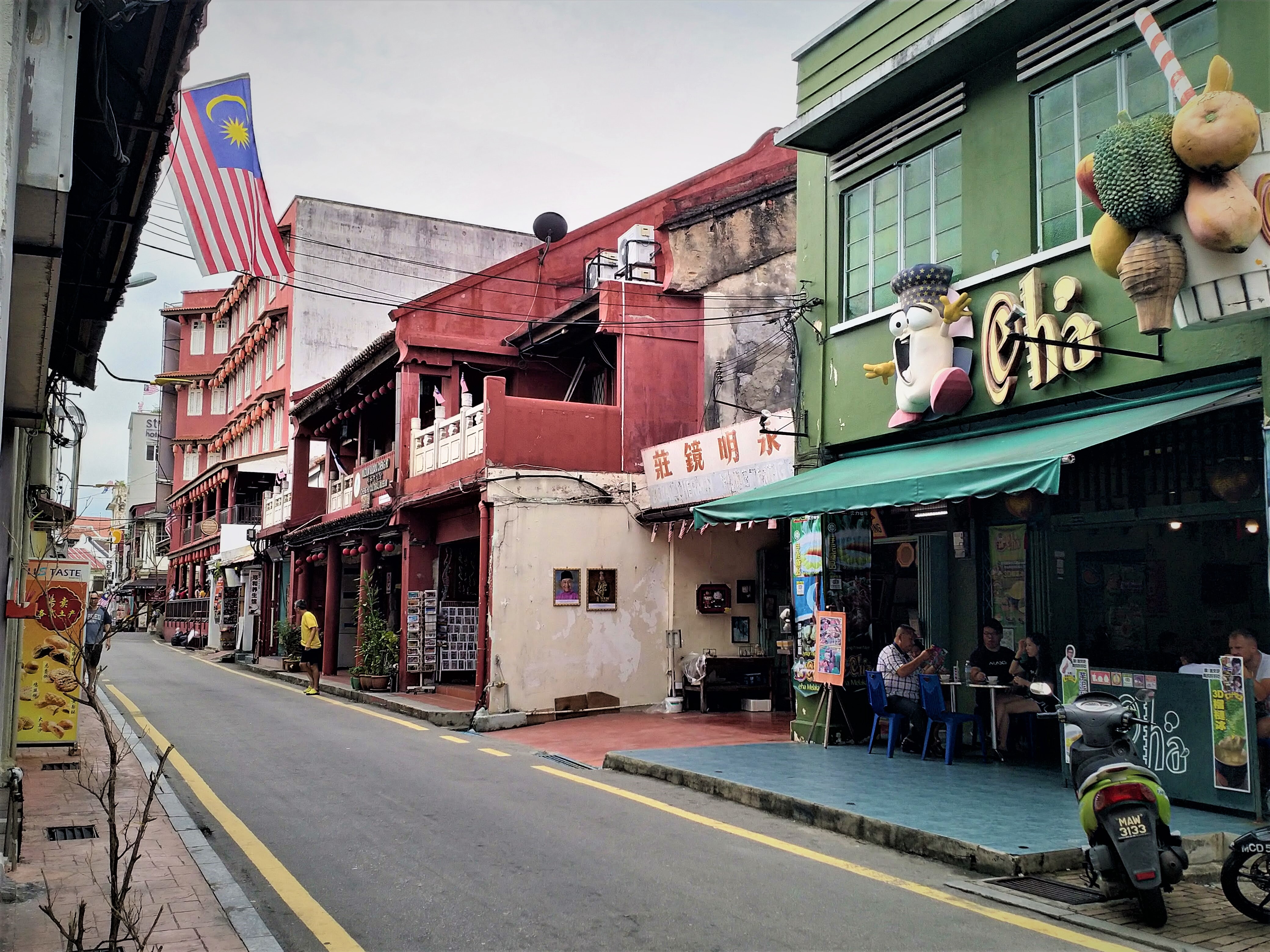
You should not miss out on the following food :
- Cendol. (This is a dessert dish has become one of Malaysia’s famous. Originating from Malacca mainly because of the ingredient, gula malacca, which is really just palm sugar) – we still call it gula malacca til this day
- Satay Celup
- Chicken Rice Ball
- Curry Laksa (noodle in curry soup)
- Malacca coffee. I recommend Calanthe Art Cafe, serving up coffee from all states of Malaysia. The staff are very helpful and would happily recommend you a cup that suits your taste buds.
- Ikan bakar which literally means burnt fish but don’t worry, they are not serving you burnt fish! It is actually just smoked. It is mainly famous for fish, but these days they do all meats (chicken, squid, prawn) (PS: you will need a car to get to those places)
- Pork Sate (essentially meat skewers)
- Pandan chicken – a chicken grilled with Pandan leaves (Pandan is known to be Asia’s version of vanilla)
- Otak-otak (It’s a fish paste, which has an acquired taste)
- Nyonya kuih (malay cakes)
Malacca isn’t a very big state. It’s easy to walk around and there are many lanes you can wander into and you will find shops with local crafts and arts. If it gets too hot, there are cosy cafes for you to wind down. During the night, it’s lively
I did my best but if you want to know what else you can/should do, I found this site really useful.


 Eat, Sleep, Travel, Repeat